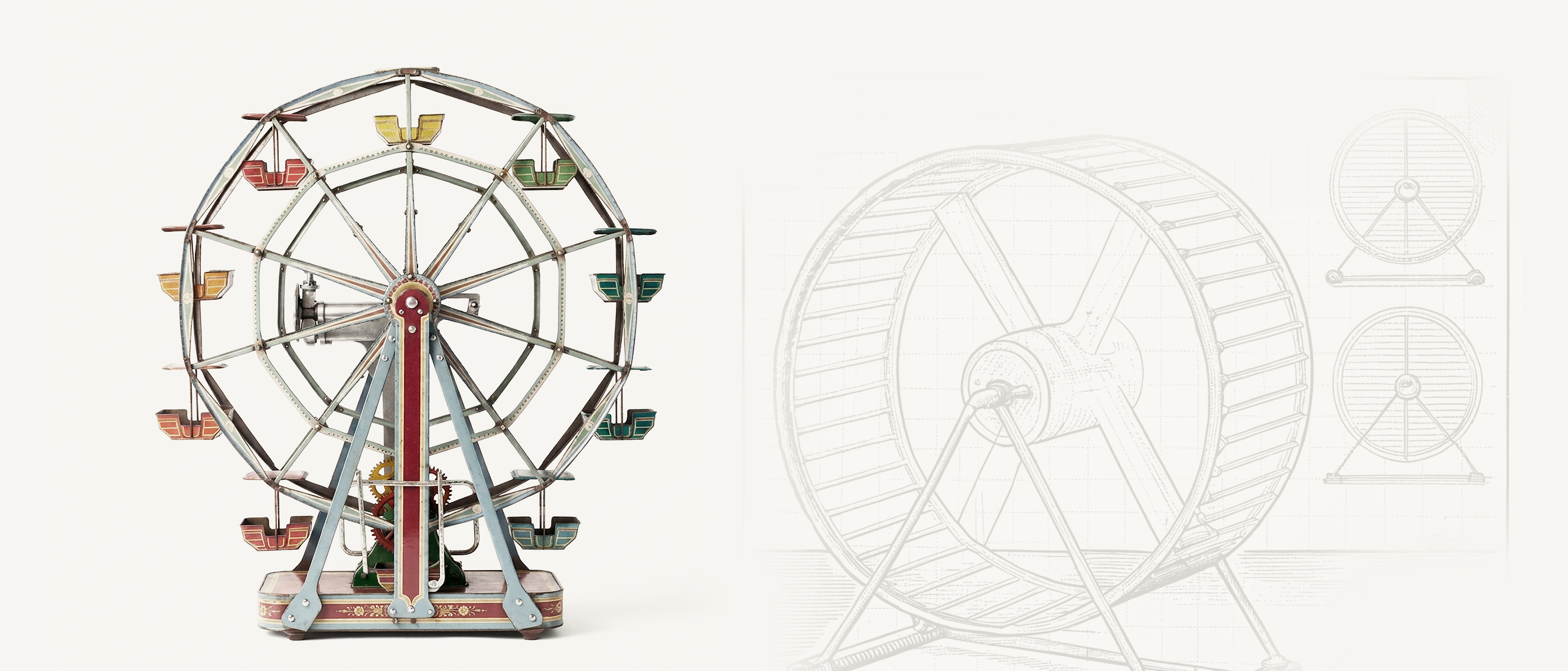
Round and round we go
Gaining an advantage in AI design workflow's isn't based on better prompting. It's something we've been doing for decades...
First off, this isn’t an "AI is taking my job" post. It’s a "who’s already got an edge?" post.
As AI settles into creative workflows, a divide is opening up. Some people consistently get better results. Experience helps, but something deeper is at play... an insight sitting in plain sight.
Enter the Art Director
I’ve never carried the title, but I’ve worked with enough Art Directors to appreciate their superpower. It isn’t simply seeing the vision... it’s being able to articulate it. They instinctively know how to explain why something isn’t working and what needs to change.
They choose words that shape an idea. Words that push, pull, tighten, soften, emphasize, and refine.
Think about a typical creative brief. It rarely says, "Make a brochure." It says:
- "The typography should feel established, but not corporate."
- "Give the layout room to breathe."
- "The call-to-action should feel confident, not aggressive."
None of those are technical instructions. They're creative direction. Today, the prompt bar is simply a new creative brief. Those same words can guide an AI model to the same destination.
Prompt Seekers Lament
Sometimes we become prompt seekers, searching for a magical combination of words that will produce perfection on the first try.
Anyone in design knows how unrealistic that is.
The first concept is rarely the finished concept. Designer presents, client reacts, designer refines, client reacts again... and round you go.
Iteration wasn't a workaround. It was the process all along.
Yet the trend on X is always some eye-catching image with everyone asking for the "one-and-done" prompt.
AI is great at creating options. It's much less impressive at knowing which option is right.
Cue the Director
Instead of saying, "Something isn't right," an Art Director diagnoses the problem:
"The composition is balanced, but the visual hierarchy competes with the message. Reduce secondary elements, increase contrast on the subject, and let negative space do the work."
That's the difference. It isn't better prompting.
It's knowing what to ask for next. The ongoing conversation is where the real creative direction happens.
Sometimes that direction means knowing when AI isn't the right tool. Today's workflow might mean moving from ChatGPT to Nano Banana, switching image models, or (wild concept) handing it off to another human.
The role of an Art Director has never been to personally create every piece of work. It's knowing how to get the best work out of the tools and people available.
We already do this when we bounce between models based on their strengths or plug in system prompts and style references. But style matching isn't direction.
No specific lessons here... or are there? Just an observation.
Well, a shared one (as Adobe recently noted in their piece, "Creative direction: The secret to great AI images").